HEALTH
gingivitis vs periodontitis: What’s the Real Difference and Why It Matters

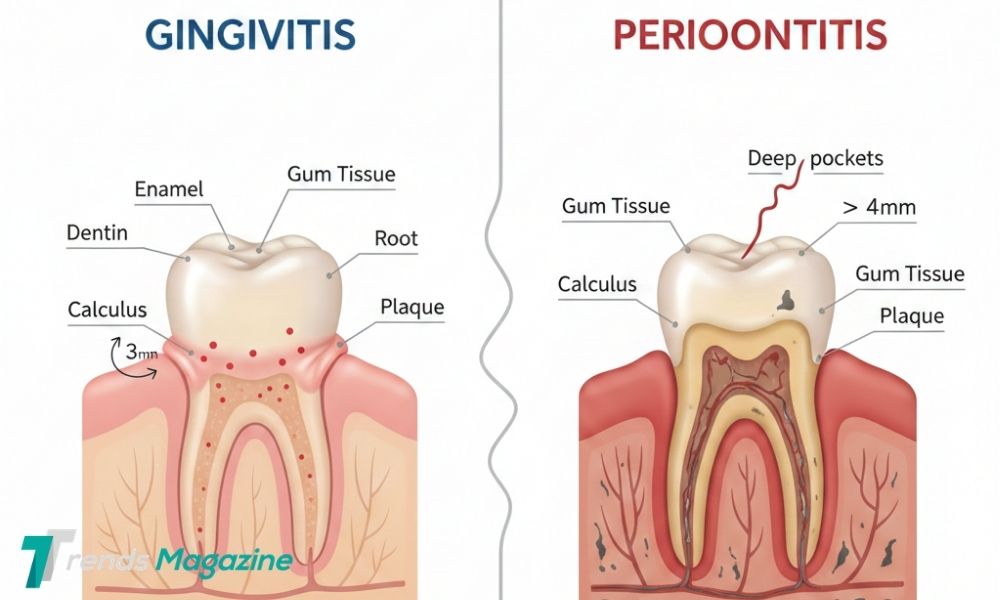

If you’ve ever noticed bleeding gums while brushing, you’ve probably paused and wondered:
Is this just mild gingivitis… or something more serious like periodontitis?
Understanding gingivitis vs periodontitis isn’t just helpful it’s essential. Both conditions affect your gums, but they are not the same. In fact, knowing the difference early could protect you from long-term tooth loss and expensive dental treatments.
In this comprehensive, SEO-optimized and easy-to-read guide, we’ll walk through:
-
What gingivitis really is
-
What periodontitis means for your oral health
-
The key differences between gingivitis vs periodontitis
-
Causes and risk factors
-
Symptoms to watch closely
-
The stages of gum disease
-
Treatment options
-
Prevention strategies
-
Frequently asked questions
Let’s break it down clearly, practically, and without unnecessary medical jargon.
What Is Gingivitis?
Gingivitis is the earliest and mildest stage of gum disease. It happens when plaque — a sticky film of bacteria — builds up along the gumline and irritates the surrounding tissue.
Plaque forms naturally on your teeth every day. If it isn’t removed through brushing and flossing, it can inflame the gums.
Common Signs of Gingivitis
-
Red or swollen gums
-
Bleeding when brushing or flossing
-
Tender gum tissue
-
Mild, persistent bad breath
-
Slight gum sensitivity
Here’s the good news: gingivitis is reversible.
With proper oral hygiene and professional dental cleaning, your gums can return to a healthy state. There is no permanent bone damage at this stage.
That’s why early detection is so important.
What Is Periodontitis?
Periodontitis is an advanced form of gum disease that develops when gingivitis is left untreated. Instead of staying limited to the surface gums, the infection spreads deeper into the supporting structures of the teeth.
This includes:
-
Connective tissue
-
Periodontal ligaments
-
Jawbone
Unlike gingivitis, periodontitis can cause permanent damage.
Symptoms of Periodontitis
-
Persistent bad breath
-
Gum recession (gums pulling away from teeth)
-
Deep pockets between teeth and gums
-
Loose or shifting teeth
-
Pain when chewing
-
Bone loss visible on X-rays
-
Pus between gums and teeth (in severe cases)
Periodontitis cannot be completely reversed, but it can be managed and stabilized with professional treatment.
Gingivitis vs Periodontitis: The Core Differences
Understanding gingivitis vs periodontitis becomes easier when comparing them side by side.
| Feature | Gingivitis | Periodontitis |
|---|---|---|
| Severity | Mild | Advanced |
| Reversible | Yes | No (damage is permanent) |
| Bone Loss | No | Yes |
| Gum Recession | Rare | Common |
| Tooth Mobility | No | Possible |
| Risk of Tooth Loss | Low | High |
| Treatment | Cleaning & improved hygiene | Deep cleaning, possible surgery |
The Biggest Difference?
Gingivitis affects only the gums.
Periodontitis affects the gums, connective tissue, and bone.
That difference is critical.
What Causes Gingivitis and Periodontitis?
The main cause of both conditions is plaque buildup.
Here’s how it progresses:
-
Plaque forms on teeth.
-
It hardens into tartar (calculus).
-
Bacteria multiply under the gumline.
-
The body responds with inflammation.
-
Tissue breakdown begins.
If untreated, the inflammation extends deeper and begins destroying supporting bone which marks the transition from gingivitis to periodontitis.
Major Risk Factors
While plaque is the primary trigger, certain factors increase the likelihood of developing gum disease:
-
Poor oral hygiene
-
Smoking or tobacco use
-
Diabetes
-
Hormonal changes (pregnancy, menopause)
-
Genetic predisposition
-
Chronic stress
-
Certain medications that reduce saliva
-
Poor nutrition
Smoking, in particular, significantly increases the risk of severe periodontitis.
Gingivitis vs Periodontitis Symptoms: How to Tell the Difference
Many people search for “gingivitis vs periodontitis symptoms” because early signs can overlap.
Signs You Likely Have Gingivitis
-
Bleeding while brushing
-
Puffy or swollen gums
-
Slight redness
-
No loose teeth
-
No gum recession
-
No deep gum pockets
Signs You May Have Periodontitis
-
Gums pulling away from teeth
-
Chronic bad breath
-
Teeth shifting or separating
-
Pain while chewing
-
Visible gum pockets
-
Loose teeth
-
Gum abscesses
If symptoms go beyond mild bleeding and swelling, you should schedule a dental appointment.
The Stages of Gum Disease
Gum disease progresses gradually. Understanding the stages can help you act early.
1. Healthy Gums
Firm, pink tissue. No bleeding.
2. Gingivitis
Inflamed gums with bleeding, but no bone damage.
3. Early Periodontitis
Minor bone loss begins. Gum pockets deepen slightly.
4. Moderate Periodontitis
Increased bone loss and deeper pocket formation.
5. Advanced Periodontitis
Severe bone destruction, loose teeth, possible tooth loss.
The earlier gum disease is caught, the simpler and less expensive treatment becomes.
Treatment Options: Gingivitis vs Periodontitis
Gingivitis Treatment
Treatment is straightforward:
-
Professional dental cleaning
-
Improved brushing technique
-
Daily flossing
-
Antibacterial mouthwash
-
Regular dental checkups
With consistent care, gums can fully recover within weeks.
Periodontitis Treatment
Treatment is more involved and may include:
-
Scaling and root planing (deep cleaning below gumline)
-
Local or oral antibiotics
-
Laser therapy
-
Gum surgery
-
Bone grafting
-
Ongoing periodontal maintenance visits
While damage cannot be reversed, progression can be stopped.
Why You Should Never Ignore Bleeding Gums
Many people think bleeding gums are normal.
They’re not.
Bleeding is one of the earliest warning signs of inflammation. When ignored, it can slowly progress into periodontitis — often without pain in the early stages.
By the time discomfort appears, damage may already be significant.
Regular dental checkups are essential because gum disease can progress quietly.
Prevention: Protecting Your Gum Health Long-Term
Preventing gingivitis and periodontitis comes down to consistency.
Daily Oral Care
-
Brush twice daily for two minutes
-
Use a soft-bristled toothbrush
-
Floss at least once daily
-
Use fluoride toothpaste
-
Consider antimicrobial mouthwash
Professional Dental Care
-
Dental checkups every six months
-
Professional cleanings
-
Early periodontal evaluations if needed
Lifestyle Adjustments
-
Quit smoking
-
Manage diabetes effectively
-
Eat a balanced, nutrient-rich diet
-
Reduce stress
-
Stay hydrated
Prevention is far easier and far less costly than treating advanced periodontitis.
Long-Term Health Risks of Periodontitis
Gum disease doesn’t only affect your mouth.
Research has linked severe periodontitis to increased risk of:
-
Heart disease
-
Stroke
-
Diabetes complications
-
Respiratory infections
-
Pregnancy complications
Inflammation in the gums can influence inflammation elsewhere in the body.
Your oral health is directly connected to your overall health.
Final Thoughts on Gingivitis vs Periodontitis
When comparing gingivitis vs periodontitis, the difference comes down to severity and permanence.
Gingivitis:
-
Mild inflammation
-
Reversible
-
Limited to gum tissue
Periodontitis:
-
Advanced infection
-
Irreversible bone damage
-
Can lead to tooth loss
The most important takeaway?
Bleeding gums are not normal. They are a warning sign.
Addressing gingivitis early prevents it from progressing into periodontitis potentially saving your smile, your teeth, and your long-term health.
FAQs
Is gingivitis painful?
Usually no. It often causes mild irritation but not severe pain.
Can gingivitis turn into periodontitis?
Yes. If untreated, gingivitis can progress into periodontitis over time.
Can periodontitis be cured?
It cannot be fully reversed, but it can be managed and stabilized with professional treatment.
How long does it take for gingivitis to become periodontitis?
It varies depending on oral hygiene, genetics, and overall health. It can take months or even years.
Is bleeding gums always gingivitis?
Most commonly, yes. However, persistent bleeding should always be evaluated by a dentist.