
HEALTH
6 Benefits Of Having One General Dentist Throughout Your Life


You see many doctors in your life, but your general dentist can be your steady guide. One dentist who knows your story can spot small changes in your mouth before they become painful problems. This long relationship builds trust. You feel safe to ask hard questions. The dentist can also shape a long term plan for your teeth, gums, and jaw. You do not need to repeat your history or adjust to a new style of care each time. Instead, you get steady support through childhood, adulthood, and older age. Many Bucks County dentists already care for several generations in one family. That kind of bond can calm fear, lower cost, and protect your health. This blog shows six clear benefits of staying with one general dentist for life.
1. Your dentist knows your full health story
Your mouth changes over time. So does your health. One dentist who follows you for years can connect the dots.
- Knows your health history and drug list
- Understands your fears and past bad visits
- Tracks changes in your teeth, gums, and bite
The dentist can spot slow shifts that a new provider might miss. For example, small gum loss over many years can warn of bone loss. The dentist can act early instead of waiting for pain or loose teeth.
This close watch also helps with other health problems. The mouth can show signs of diabetes, heart disease, and sleep apnea. The National Institute of Dental and Craniofacial Research explains how your mouth health links to your whole body.
2. Care plans match your life stage
Your needs at age 8 are not the same as your needs at age 48. One general dentist can plan for all three stages.
- Childhood. Cavity checks, sealants, braces talks, injury care
- Adulthood. Stress grinding, gum care, filling repair, whitening
- Older age. Dry mouth, root decay, partials, implants, denture fit
Instead of starting over at each stage, you get one plan that shifts with you. The dentist can space out care to fit your budget and your time. You can also plan for big steps like crowns or implants years ahead.
3. Lower cost through prevention and early care
Routine checkups and cleanings cost less than root canals and extractions. A long term dentist can push hard on prevention so you avoid many urgent visits.
The table below shows a simple comparison. Costs are examples and not exact prices. They show how early care can save money.
| Type of visit | Purpose | Typical timing | Relative cost level
|
|---|---|---|---|
| Cleaning and exam | Remove plaque and check for early problems | Every 6 to 12 months | Low |
| Simple filling | Repair small cavity | As needed when decay is caught early | Low to medium |
| Crown | Cover tooth with large decay or crack | When decay is not treated early | Medium to high |
| Root canal and crown | Treat deep infection in tooth | Often after long term decay or injury | High |
| Extraction and implant or bridge | Remove tooth and replace it | When tooth cannot be saved | Very high |
One dentist who sees you often can keep more care in the first two rows. That means fewer long visits, less time off work, and less strain on your savings.
4. Less fear and stress at each visit
Dental fear is common in both kids and adults. A long term bond can soften that fear.
- You know the staff and the layout
- You trust how the dentist explains each step
- Your child sees you stay calm with the same dentist
Over time, your brain links the office with safety instead of pain. You may need less medicine for anxiety. You may also feel strong enough to ask for breaks, numbing, or other steps that help you cope.
The Centers for Disease Control and Prevention stresses that steady dental care lowers tooth loss and pain.
5. Easier family care and scheduling
When one general dentist cares for your whole family, life gets easier.
- Group visits for siblings or parents and kids
- One office to call for records and urgent needs
- Shared tips that fit your family diet and habits
The dentist can also see patterns. If one child gets many cavities, the dentist can check the rest of the family for the same risk. You get clear steps that fit your home life, like snack changes, fluoride use, or mouth guards for sports.
6. Stronger safety net during illness or change
Life shifts. You may face pregnancy, new drugs, cancer care, or long term illness. A dentist who already knows you can react fast.
- Adjusts your care for new drugs and health limits
- Works with your doctor when needed
- Plans safe visits if you use a walker or wheelchair
You do not need to explain your story from the start during a hard time. Instead, you can focus on getting through treatment while your dentist protects your mouth.
How to build a lifelong partnership with your dentist
You can start this bond at any age. You only need three steps.
- Pick a general dentist who explains things in plain words
- Keep regular checkups even when you feel fine
- Speak up about fear, money limits, and your goals
Over years, this steady link can guard your teeth, your wallet, and your peace of mind. You deserve care that grows with you, not care that starts from zero every few years. One trusted general dentist can give you that steady ground.

Dental visits often stir up fear, shame, or old memories. You might picture a bright light, sharp tools, and no control. That feeling can stop you from getting care. A Coral Springs dentist can change that. Clear patient education can turn dread into steady trust. You learn what will happen before it starts. You see simple images or models that show each step. You hear honest answers to your questions. As a result, you feel prepared. You know what you can stop, what you can pause, and what you can expect after. This knowledge lowers your heart rate. It relaxes your muscles. It gives you a sense of power in the chair. Patient education does not sugarcoat treatment. Instead, it sheds light on it. That light cuts through fear and confusion. It helps you show up, stay calm, and protect your mouth with steady care.
Why Dental Anxiety Is So Common
You are not alone if your chest tightens when you think about the dentist. Many people carry three heavy worries.
- Pain during treatment
- Loss of control in the chair
- Fear of being judged for the state of their teeth
Past painful visits can lock into your memory. So can stories from family. Children often copy a parent’s fear. Then one missed visit grows into years without care. The result is more decay, more infection, and more complex treatment. That cycle feeds even more fear.
Education breaks that loop. It replaces guesswork with clear steps. It gives you a role in each choice.
How Patient Education Lowers Fear
Patient education is more than a quick speech before a filling. It is a steady process that starts before you sit in the chair. It has three main parts.
- Clear information about your mouth
- Simple plans for treatment
- Practical tools you can use at home
You see pictures of your own teeth. You hear a calm, short plan. You learn what you can do during the visit to stay steady. This shared plan changes the visit from something done to you into something done with you.
What Education Looks Like During a Visit
General dentists use many simple methods to teach and calm at the same time. Each one gives you more control.
- Tell show do. The team explains a tool. Then they show it. Then they use it.
- Plain language. They use words like “numb,” “clean,” or “soft tissue,” not long terms.
- Visual aids. They use mirrors, photos, or models so you can see what they mean.
- Stop signals. They agree on a clear hand signal so you can pause at any time.
- Step by step talk. They describe each step as it starts, not after it ends.
Each part is small. Together they create a strong sense of safety.
Simple Education Tools Dentists Use
Many offices use low-tech tools that work well for children and adults. These tools keep the focus on your comfort.
- Picture charts that show tooth decay and gum disease
- Plastic models that show fillings, crowns, and implants
- Short videos about cleanings, X-rays, or numbing
- Printed handouts you can take home
National resources support this work. The National Institute of Dental and Craniofacial Research shares clear patient guides on pain control and checkups. The Centers for Disease Control and Prevention provides simple facts on oral health and prevention.
Comparing Two Types of Dental Visits
The table below shows how visits feel with and without strong patient education.
| Aspect of visit | Limited patient education | Strong patient education
|
|---|---|---|
| Before the visit | You receive a short reminder with no clear plan. | You receive clear instructions and a simple outline of what to expect. |
| During check in | No one asks about fear or past pain. | Staff asks about fear, pain history, and what scares you most. |
| Explanation of findings | The dentist uses technical terms you do not know. | The dentist uses simple words and shows your X-rays or photos. |
| Role in decisions | You receive a plan with little choice. | You hear options, risks, and benefits. You help choose the plan. |
| Pain control | Pain plan is not explained in advance. | Pain options are explained. You agree on a stop signal. |
| After care | You leave with brief verbal instructions. | You leave with written steps and clear warning signs. |
| Emotional impact | You leave tense and unsure about coming back. | You leave tired but more confident about the next visit. |
Helping Children Through Education
Children read faces and tones. A calm, clear approach can shape a lifetime of comfort with dental care. You and the dentist can work as a team.
- Use simple words about “counting teeth” and “washing sugar bugs.”
- Let your child see tools on the tray.
- Ask the dentist to explain each step before it starts.
When a child knows what will happen and sees you stay calm, fear often fades. Small wins during early visits build trust for the next ones.
What You Can Ask Your Dentist
You can guide your own education. Clear questions help you feel safe and informed.
- What will you do first, second, and third during this visit
- What will I feel at each step
- How will you keep me comfortable
- What are my options for this problem
- What can I do at home to reduce the need for more treatment
Good dentists welcome these questions. Your voice in the room is part of your care.
Turning Fear Into Steady Care
Dental fear can feel heavy. It does not need to rule your health. Patient education gives you three anchors. You gain clear facts about your mouth. You gain a shared plan with your dentist. You gain tools you can use at home and during the visit.
With those pieces in place, each visit becomes more bearable. Pain is controlled. Surprises are rare. Shame loses its grip. That change protects your teeth, your gums, and your overall health for years.

Strong teeth help your child eat, speak, and sleep without pain. Yet tooth decay often starts early and moves fast. You cannot always see it. Sugar, weak brushing, and deep grooves in back teeth give cavities a place to hide. Regular cleanings help. Still, they cannot reach every tiny groove. Here is where sealants come in. Sealants are thin protective coatings placed on the chewing surfaces of back teeth. They block food and germs from settling in. They reduce the risk of decay during the years when children often struggle with brushing. A Lodi family dentist can explain when sealants make sense, how they work, and what your child will feel during treatment. You gain one more tool to guard your child’s smile. You also gain a little more peace of mind.
Why children face a high risk of cavities
Childhood is a rough time for teeth. New molars come in with deep pits. Sticky snacks cling to those pits. Brushing skills are still growing. Flossing often gets skipped. All of this gives cavity germs more time to attack.
The Centers for Disease Control and Prevention reports that many children have had at least one cavity in their permanent teeth by age 11. You can see the data on their sealant fact sheet at CDC dental sealants. The numbers show a clear pattern. Children without sealants have far more cavities in their back teeth.
You cannot watch every snack or every brush. You can still change the odds. Sealants do that by closing off the spots where germs like to live.
How sealants protect young teeth
Sealants work like a shield over the chewing surface of molars. They fill in the grooves where a brush tip cannot reach. Food and germs stay on top of the coating instead of inside the tooth. Then fluoride toothpaste and water can wash them away with much less effort.
Sealants help in three main ways.
- They block contact between tooth enamel and cavity germs.
- They make the tooth surface smoother and easier to clean.
- They protect during the years when brushing habits are still forming.
National studies show that sealants can prevent most cavities in treated molars for many years. The evidence is clear. When children get sealants on time, they face fewer fillings, fewer infections, and fewer missed school days due to dental pain.
Step by step: what your child can expect
The sealant visit is simple. It does not involve shots. It does not remove tooth structure. It is quiet and quick.
Here is the usual process.
- Cleaning. The dentist or hygienist cleans the chewing surface of each tooth that will receive a sealant.
- Drying. Cotton or a small sponge keeps the tooth dry. A gentle air stream dries the surface.
- Preparation. A mild gel roughens the surface so the sealant can grip. The gel stays on for a short time, then gets rinsed away.
- Placement. The liquid sealant is painted onto the tooth. It flows into every groove.
- Curing. A special blue light hardens the sealant. It sets in seconds.
- Check. The dentist checks the bite and smooths any high spots.
Your child feels air, water, and gentle pressure. The taste may seem new. Pain is not part of the process. You can reassure your child with that fact before the visit.
When to consider sealants for your child
Timing matters. Most children get the first permanent molars around age 6. The second permanent molars come in around age 12. Sealants protect best when placed soon after these teeth appear.
Talk with your dentist if your child:
- Has deep grooves in baby or permanent molars.
- Has a history of cavities.
- Snacks often or drinks sweet beverages.
- Struggles with brushing or has special health needs.
Some dentists also place sealants on baby molars when the risk of decay is high. This can hold space for permanent teeth and prevent early tooth loss.
Sealants, fluoride, and brushing: how they compare
Sealants do not replace brushing, flossing, or fluoride. Each method protects teeth in a different way. When used together, they give stronger defense against decay.
| Protection method | Main purpose | Where it works best | How often needed
|
|---|---|---|---|
| Sealants | Block food and germs from entering grooves | Chewing surfaces of back teeth | Every few years, checked at each visit |
| Fluoride toothpaste | Strengthen enamel and slow early decay | All tooth surfaces | Twice per day brushing |
| Fluoride varnish | Give a strong burst of enamel protection | All teeth, often for higher risk children | Every 3 to 6 months as advised |
| Brushing and flossing | Remove soft plaque and food | All teeth and between teeth | Twice per day brushing and daily flossing |
You can read more about how sealants and fluoride work together in child dental health on the National Institute of Dental and Craniofacial Research site at NIDCR sealants for kids and teens.
How long sealants last and how to care for them
Sealants can last several years when placed on a clean, dry tooth and checked on a regular schedule. They may wear down or chip over time. That is normal. The dentist can repair or replace them.
You can help sealants last by following three simple steps.
- Keep regular checkups so the dentist can inspect each sealant.
- Encourage gentle chewing on hard foods like ice or unpopped kernels.
- Maintain daily brushing with fluoride toothpaste and flossing.
If a sealant comes off, the tooth does not fail right away. Yet the grooves lose their shield. Call your dentist so the tooth can be checked and resealed if needed.
Choosing sealants for your family
Sealants offer a quiet form of protection. You will not see them when your child smiles. Your child will not feel them after the first day. Yet they guard the spots most likely to decay during childhood.
Ask your dentist clear questions.
- Which teeth should receive sealants and why.
- What material will be used.
- How often the sealants will be checked.
With that information, you can decide what fits your child. You lower the chance of tooth pain, emergency visits, and missed school. You also give your child a stronger start toward a healthy adult smile.
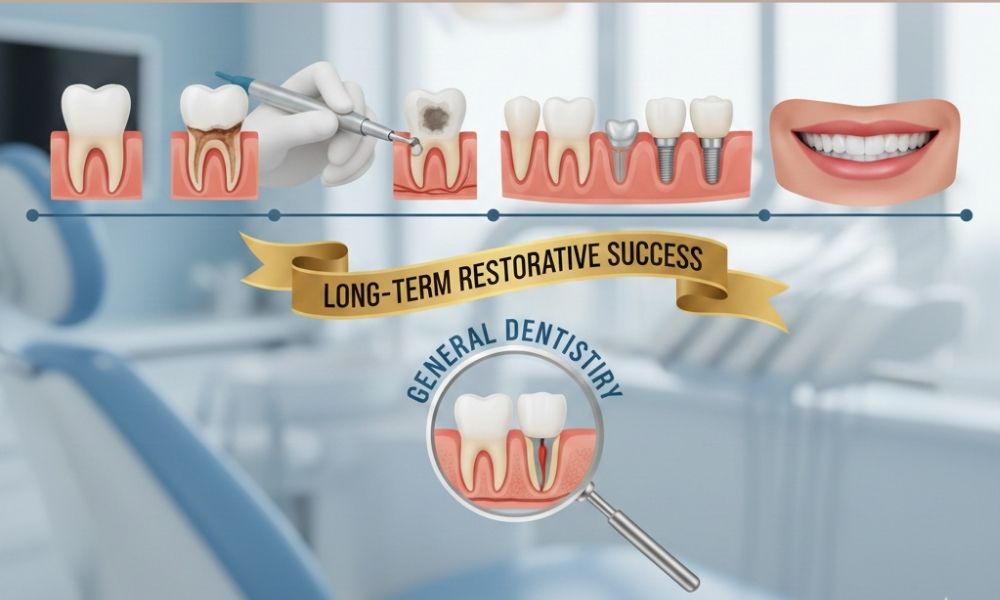
Long-term restorative success does not start with a crown or an implant. It starts with routine care in a general dentistry office. You may see your specialist for a few visits. You have been seeing your general dentist for many years. That steady relationship protects your time, your money, and your comfort. A Lutz dentist checks how your teeth, gums, and bite work together. Then that dentist tracks changes, repairs small problems early, and supports any past treatment. Every cleaning visit is a chance to guard the work you already paid for. Every exam is a chance to prevent a crack, infection, or failed filling. Good general dentistry also guides your daily brushing, flossing, and food choices. That guidance keeps your mouth stable so future treatment is easier, shorter, and less costly. You do not need perfect teeth. You need steady care that protects the treatment you already have.
Why general dentistry comes before every big repair
Every crown, implant, or bridge sits on a base. That base is your teeth, gums, and jaw. If that base is weak, even the best work fails fast. Routine visits let your dentist keep that base strong.
During a checkup, your dentist:
- Looks for early tooth decay and worn spots
- Checks your gums for swelling or bleeding
- Reviews your bite to see where teeth hit too hard
Early fixes cost less and last longer. Without this step, you risk pain, repeated work, and loss of teeth. You also face a higher risk of gum disease, which can break down bone that supports crowns and implants.
The Centers for Disease Control and Prevention explains how untreated decay and gum disease lead to tooth loss and pain.
How routine care protects past treatment
Many people think a crown or implant is the end of the problem. In truth, it is the start of a new phase. That new tooth needs care for life.
Your general dentist helps you:
- Clean around crowns and bridges so food and plaque do not build up
- Use floss, brushes, or water cleaners in the right way around implants
- Adjust your bite if a tooth hits too hard and starts to crack work
Every visit is a chance to spot loose edges, small chips, or gum changes around your past work. Quick action can save a crown or repair a chip before it spreads. That keeps you out of the chair for longer visits.
General dentistry and your family’s daily habits
Restorations last longer when your home care is steady. General dentistry links office work with your habits at home.
Your dentist and team can:
- Show you how to brush near the gumline where decay starts
- Teach your child how to clean around new fillings or sealants
- Talk about drinks and snacks that wear down enamel or feed decay
The National Institute of Dental and Craniofacial Research shares simple steps for daily care for all ages.
Prevention versus repair over a lifetime
General dentistry focuses on prevention. Restorative work treats damage. Both matter. Yet prevention usually costs less and hurts less.
The table below shows a simple comparison over time. Costs and years are sample numbers. They show patterns, not set prices.
| Type of care | Typical visit frequency | Sample cost over 10 years | Common results
|
|---|---|---|---|
| Routine exams and cleanings | 2 times each year | Lower total cost | Fewer cavities and fewer emergencies |
| Checkups plus small fillings when needed | 2 to 3 visits each year | Moderate total cost | Short visits and simple repairs |
| Irregular visits and mostly emergency care | Only when in pain | Higher total cost | More crowns, root canals, and extractions |
| Late care with advanced disease | Many long visits | Highest total cost | More implants, dentures, and lost teeth |
Regular visits spread out the cost and pain. Sporadic visits push you into urgent care. That pattern often needs bigger repairs that stress your budget and your peace of mind.
The three pillars of long-term restorative success
Every strong plan for your mouth rests on three pillars. Each one supports the other two.
- Healthy gums and bone. Cleanings remove plaque and hard buildup. That protects the bone that holds your teeth and any implants.
- Stable bite. Bite checks and small polishing steps keep teeth from hitting too hard. That protects fillings, crowns, and jaw joints.
- Strong enamel and clean edges. Fluoride use, sealants, and early fillings keep decay away from the edges of crowns and old work.
When one pillar weakens, the others strain. For example, gum disease can expose the edges of crowns. That exposure leads to decay and loose teeth. Regular general care keeps all three pillars in balance.
How general dentists work with specialists
Sometimes you need a specialist for root canals, gum surgery, or complex implants. Your general dentist guides that process.
General dentists:
- Spot problems early and decide when a specialist is needed
- Share records and X-rays so treatment stays clear and safe
- Provide follow-up care once the specialist finishes work
This teamwork helps you avoid gaps in care. It also keeps each step aligned with your long-term plan, not just the urgent problem.
Planning your next steps
You do not need to know every type of filling or crown. You only need a clear routine and honest talks with your dentist.
To support long-term restorative success, you can:
- Schedule regular checkups and keep them
- Tell your dentist about any pain, noise, or looseness in teeth or past work
- Ask how to clean around your specific crowns, bridges, or implants
Calm, steady care protects both your natural teeth and your past treatment. Each small visit builds a stronger, more stable mouth. That steady path is what keeps your smile working for you for many years.

Luxury Villas Greece Le Collectionist: Exclusive Greek Retreats

Central Cee Net Worth: Inside His Million-Dollar Rise

Alex Aljoe: A Modern Innovator and Inspirational Leader

Linda Susan Agar: A Visionary Leader Shaping the Future of the Technology Industry 2024

eCrypto1.com Crypto Wallets: The Ultimate Guide to Secure and Efficient Cryptocurrency Storage 2025

The Viral “Emiru Handbra” Moment: How It Became a Stunning Social Media Sensation in 2024
-
 CELEBRITY1 year ago
Linda Susan Agar: A Visionary Leader Shaping the Future of the Technology Industry 2024
-
 CRYPTO1 year ago
eCrypto1.com Crypto Wallets: The Ultimate Guide to Secure and Efficient Cryptocurrency Storage 2025
-
 CELEBRITY1 year ago
The Viral “Emiru Handbra” Moment: How It Became a Stunning Social Media Sensation in 2024
-

 CELEBRITY1 year ago
The Life and Legacy of Harlow Andrus: A Journey of Heritage and Inspiration 2024
-

 FASHION1 year ago
McKinzie Valdez: Journey from Social Media Star to Entrepreneur 2024
-

 CELEBRITY1 year ago
Matt Danzeisen: The Quiet Yet Powerful Figure Behind Peter Thiel’s Success 2024
-

 CELEBRITY1 year ago
Elizabeth Rizzini Biography | Career | Personal Life and More
-

 CELEBRITY1 year ago
Deja Jackson, Ice Cube’s daughter, basketball career, biography 2024