
BUSINESS
How Accounting Firms Drive Profitability Through Advisory Services


Many firms still rely on compliance work that keeps the lights on but leaves partners exhausted and margins thin. Advisory services change that. When you shift from only filing returns and closing books to guiding decisions, you increase profit, deepen trust, and protect your staff from burnout. Clients already ask for help with cash flow, pricing, and growth. You can answer those questions in a structured way and get paid for your insight, not just your time. For example, business tax preparation in Fort Worth, TX can open the door to planning, forecasting, and ongoing check ins that produce steady revenue. Advisory work also sharpens your team. It pushes you to understand each client’s goals, risk, and stress points. That creates stronger relationships, higher fees, and lower churn. This blog shows how to build and grow advisory services that support real profit, not just busy seasons.
Why compliance work alone holds you back
Compliance work matters. You must file returns and meet rules. Yet it traps you in a cycle of long hours and flat fees. You sell tasks. You do not sell insight. You wait for deadlines to create demand. That leads to stress for you and confusion for clients.
Advisory services flip that pattern. You stop reacting. You start planning with your clients. You help them see what is coming and what it means for their money and their choices. You move from a one month rush to steady work across the year.
The Internal Revenue Service shows how complex rules can become for small employers and self employed people. Many of them read IRS guidance such as the Small Business and Self-Employed Tax Center and still feel lost. You can turn that confusion into clear steps. That is advisory work. That is value your clients feel.
What advisory services can include
You do not need fancy tools to start. You can use the work you already do and expand the conversation. Common advisory services include three core groups.
- Planning. Tax planning, cash flow planning, and basic forecasting.
- Performance. Budget support, margin review, and pricing help.
- Protection. Risk checks, internal control review, and recordkeeping support.
Each piece ties back to your current tasks. When you prepare a return, you already see trends. You see high expenses, shrinking revenue, or payroll strain. Advisory work means you talk about those trends and set a plan before the next year.
Many small firms also ask for simple help with payroll and benefits questions. Federal sites such as the U.S. Small Business Administration tax guide show how many rules owners must follow. You can turn that stress into a clear plan that fits their business and family life.
How advisory work drives profit
Advisory services raise profit in three direct ways.
- You increase revenue per client.
- You smooth cash flow across the year.
- You lower staff churn and rework.
You can move from one time tax projects to monthly or quarterly meetings. You can set simple tiers that match client needs. You also reduce unpaid time. You no longer give away complex advice during quick phone calls. You wrap that advice into a clear package and price.
Typical difference between compliance only and advisory focused firms
| Factor | Compliance only focus | Compliance plus advisory focus
|
|---|---|---|
| Revenue pattern | Heavy in filing season. Light rest of year. | Steady across year through recurring meetings. |
| Average revenue per client | Low return based fees. | Higher due to planning and review packages. |
| Staff workload | Spikes with long nights and weekend work. | More even work spread with fewer rush jobs. |
| Client loyalty | Clients shop on price. | Clients stay for guidance and peace of mind. |
| Firm value | Based on book of returns. | Based on strong ties and recurring contracts. |
How to start advisory services with current clients
You do not need a new department. You can begin with three simple steps.
- Pick one service you can offer fast. For example, a yearly tax planning meeting.
- Choose a small group of current clients who trust you.
- Set a clear price and a simple one page summary of what you will do.
During your next compliance meeting, ask three questions.
- What money issues keep you up at night.
- What would success look like for you in one year.
- How often would you like to talk about your numbers.
Then match your service to their answers. You might offer quarterly check ins for one client and a yearly plan for another. You stay flexible. You keep the promise clear. You also explain that this is separate from return work. That step guards your time and your staff time.
How to price advisory work with confidence
Pricing feels hard. Many firms fear pushback. Yet you can keep it simple and firm. You can use three common models.
- Fixed fee per service. One price for a yearly planning meeting.
- Monthly package. One price for a set number of meetings and support.
- Project fee. One price for a short term project such as a cash flow reset.
You avoid hourly quotes when you can. You speak in plain words. You explain what is included and what is not. You link the price to clear outcomes clients care about. For example, fewer tax surprises, fewer late fees, and more clarity for family budgets.
Building a culture that supports advisory work
Advisory services need a different mindset. You and your staff must listen more and talk in clear language. You focus on three skills.
- Listening. You let clients share goals and fears before you talk about numbers.
- Translating. You turn complex rules into simple choices.
- Checking in. You follow up and track progress across the year.
You can train staff using real client stories with names removed. You can role play short meetings. You can also adjust workloads so people have time to think and prepare. That step protects quality and reduces burnout.
Protecting quality and trust
Advisory work touches life plans, jobs, and family security. You must guard quality. You keep strong records. You document advice and the facts you used. You stay current on rules through trusted sources such as IRS and SBA pages. You also set clear limits. If an issue is outside your skill, you say so and refer to another trusted professional.
When you follow these steps, you build trust that lasts. Your firm becomes more than a place that files forms. You become a steady guide through change, pressure, and hard money choices. That guidance supports your clients. It also supports a stronger, more profitable firm for you and your team.

Wealth can feel fragile. Markets change. Laws shift. One wrong move can erase years of effort. In this pressure, you need more than tax help. You need a steady partner who understands your money, your risks, and your goals. That is where skilled CPAs step in. They track every rule that touches your income, your property, and your estate. They spot quiet threats before they grow. They also help you keep more of what you earn, year after year. If you work with an Accounting firm in Santa Monica you gain a team that watches both numbers and human needs. They look at your family, your business, and your future plans. Then they build clear steps to protect what you built. This blog explains how CPAs become true partners in wealth preservation and why that partnership can mean the difference between short success and lasting security.
Why Wealth Preservation Needs More Than Investing
Wealth preservation is not only about stocks or property. It is about keeping what you earn when laws, health, and family needs keep changing. A CPA looks at three core questions.
- How much do you keep after tax each year
- What happens to your money if you die or become sick
- How secure is your income if work or business slows down
Each answer rests on clear rules. The tax code, estate rules, and business rules change often. The IRS lists new updates every year in its tax guidance. A CPA follows these shifts and adjusts your plan so your savings do not leak away through surprise bills or missed steps.
The CPA’s Role In Your Financial Life
You might think of a CPA as someone who files tax returns. That task is only one piece. A trusted CPA supports you across your life stages. Childhood, working years, and retirement.
- Early career. Set up smart saving habits and retirement accounts
- Family years. Plan for college, housing, and care for aging parents
- Business growth. Structure your company to protect income and limit risk
- Retirement. Manage withdrawals and required minimum distributions
- Legacy. Plan how money passes to children or charities
The U.S. Securities and Exchange Commission warns that emotional decisions often hurt long-term results. Their investor education pages explain how planning helps reduce fear and rushed moves. A CPA uses that same steady mindset. You gain a calm voice when markets fall or when a big life event hits.
Key Ways CPAs Protect Your Wealth
A good CPA uses clear methods to guard your money. Three stand out.
1. Strategic Tax Planning
Taxes are often your highest yearly cost. Careful planning can free money for saving or giving. A CPA can help you
- Choose the right filing status
- Use credits for children, education, or energy upgrades
- Place investments in the right accounts
- Plan stock sales to manage gains
- Time big gifts or donations
Each step reduces waste. You keep more without cutting back on your life.
2. Risk Management And Protection
Wealth can drain from lawsuits, illness, or failed deals. A CPA reviews your whole picture. Income, property, debts, and business exposure. Then the CPA works with your attorney and insurance agent. Together they help you
- Use the right business structure
- Track and separate personal and business costs
- Review coverage for health, life, and disability
- Plan for care needs in old age
This team approach protects you from shocks that can wipe out savings.
3. Estate And Legacy Planning Support
Many people avoid talking about death or disability. The result is confusion, family conflict, and large tax bills. A CPA helps you face these topics with clear facts. You can
- List all accounts and property
- Plan who will receive what and when
- Reduce possible estate taxes
- Set up a plan for children or family members with special needs
This process gives your family clarity and peace. It also keeps courts and taxes from taking control.
CPA Support For Families And Small Business Owners
Families and small business owners often carry the most strain. You may feel pulled between saving for your children and keeping a business alive. A CPA can help you
- Build a simple budget that respects your values
- Track cash flow for your home and business
- Set pay for yourself that is fair and safe
- Plan for a business sale or handoff to family
This support gives you room to care for children, parents, and workers without losing your own future.
How CPAs Compare To Other Financial Helpers
| Partner Type | Main Focus | Key Strength | Common Limits
|
|---|---|---|---|
| CPA | Taxes, reporting, and long-term planning | Deep knowledge of tax law and record keeping | May not manage investments directly |
| Financial Planner | Saving and investing plans | Helps set and track money goals | May not focus on detailed tax rules |
| Attorney | Legal rights and documents | Drafts wills, trusts, and contracts | May not review yearly money habits |
| Insurance Agent | Risk coverage | Understands policy choices | Focuses on products, not full money picture |
The strongest results come when your CPA works with these partners. Each brings a piece. Your CPA helps connect the pieces into one clear plan.
Choosing A CPA As A Long-Term Partner
You trust a CPA with private details about your income, debts, and fears. You deserve someone who earns that trust. When you meet a CPA, ask
- What experience do you have with people like me
- How do you charge for your work
- How often will we talk each year
- Do you coordinate with my planner and attorney
Notice how the CPA explains things. You should feel heard and respected. You also should leave with clear steps, not confusion.
Turning Uncertainty Into A Clear Plan
Money fear can feel heavy. You may worry about job loss, illness, or how your children will cope after you are gone. You do not need to carry that alone. A CPA can help you face hard facts, accept limits, and use the rules to your benefit.
First, gather your records. Second, talk openly about your hopes and fears. Third, follow through on the plan you built together. With that partnership, wealth preservation becomes less about luck and more about steady, honest choices that protect the people you love.

You face hard choices every day. You weigh payroll, taxes, growth, and risk while trying to keep your doors open. In those moments, you need more than a bookkeeper. You need someone who can read your numbers like a map and warn you before trouble hits. That is why many owners turn to accountants for strategic decisions. They see patterns in cash flow, pricing, and debt that you may miss. They test ideas with real data, not guesses. They ask sharp questions that protect your money and your staff. A strong accountant works as your sounding board, risk guard, and growth partner. Many firms now offer deeper support through services such as Portland business consultant and advisory. This support gives you clear choices, plain language, and steady guidance so you can act with less fear and more control.
Why numbers guide better choices than guesses
Every choice has a cost. You hire one person and give up another. You open a new site and strain your cash. When you guess, you lean on hope. When you use your numbers, you lean on proof.
Accountants turn raw records into simple answers to three hard questions.
- Can you afford this choice right now
- What do you risk if you wait
- How will this move change your cash in three, six, and twelve months
They pull reports from your books. Then they sort the noise from the signals. They show you what is steady and what is slipping. That clarity lowers fear and stops rushed moves.
How accountants support long term planning
Strategy is not a slogan. It is a chain of small choices that line up with one clear goal. Accountants help you build and keep that chain.
They do three key things for long-term planning.
- Set simple money targets for revenue, profit, and cash
- Check progress each month and flag gaps early
- Adjust plans when the economy or your costs change
The Federal Reserve provides data on business credit, rates, and trends. You can see this public data at the Federal Reserve Economic Data site. Accountants use facts like these to test your plans against real shifts in the economy. That gives you planning that is grounded, not hopeful.
Compliance as a base for smart risk taking
You cannot plan growth if you worry about audits or missed rules. Accountants keep your records clean and your filings on time. That calm base lets you take smart risks.
They watch three pressure points.
- Tax rules that change what you keep from each sale
- Payroll and benefits rules that affect hiring choices
- Recordkeeping rules that protect you in an audit
The Internal Revenue Service explains record rules for small businesses at the IRS Recordkeeping page. Accountants use guidance like this to build simple systems that you and your staff can keep up with each day.
Comparing bookkeepers and strategic accountants
Many owners use the word accountant for any money helper. Yet the role can be very different. The table below shows key contrasts.
| Function | Bookkeeper focus | Strategic accountant focus
|
|---|---|---|
| Main purpose | Record past activity | Guide future choices |
| Time frame | Day to day and month end | Next quarter and next year |
| Key tools | Ledgers and basic reports | Cash forecasts and budgets |
| Typical questions | What happened | What should happen next |
| Risk view | Spot obvious errors | Weigh outcomes and tradeoffs |
You may need both roles. Yet you place deep trust in the person who helps you pick a path. That is why owners lean on accountants who can step beyond records and speak about outcomes.
Turning raw data into simple choices
Numbers alone do not help. You need the story behind them. Skilled accountants translate complex reports into plain words. This translation helps you act, not freeze.
They often structure advice in three clear paths.
- Safe path. Hold cash, slow hiring, protect what you have
- Balanced path. Add some costs and test new offers
- Bold path. Invest more, accept higher short-term strain
You then choose the path that fits your risk comfort and your family’s needs. You stay in control. The accountant supplies guardrails.
Why trust grows over time
Trust does not come from one tax season. It grows through repeated tests. Over several years, you see how often your accountant was honest and clear. You notice three things.
- They tell you what you need to hear, not what you want to hear
- They admit limits and pull in other experts when needed
- They protect both your business and your home life
Many owners share money worries with no one else. An accountant hears these fears, keeps them private, and answers with facts. That mix of care and blunt truth builds strong trust.
Working with a consultant and advisory partner
Some firms blend accounting, tax, and business coaching. Services such as a business consultant can bring numbers, planning, and coaching into one steady relationship.
In this setup, you get three supports.
- Regular check-ins on cash, profit, and debt
- Simple scorecards that your whole team can track
- Clear next steps after each review
This steady rhythm turns strategy from a one-time event into a habit. You stop reacting in fear and start acting with intent. You gain a partner who knows your history and keeps your long-term goals in view.
How to choose the right accountant for strategic help
You deserve someone who respects your work and your time. When you interview accountants, look for three signs.
- They ask questions about your goals, not just your forms
- They explain reports in words you can use with your staff and family
- They offer a clear plan for how often you meet and what you will review
Trust grows when you see that your adviser cares about both your numbers and your stress level. With the right accountant, you face decisions with more courage and less doubt. Your numbers stop being a source of fear and start being a source of power.
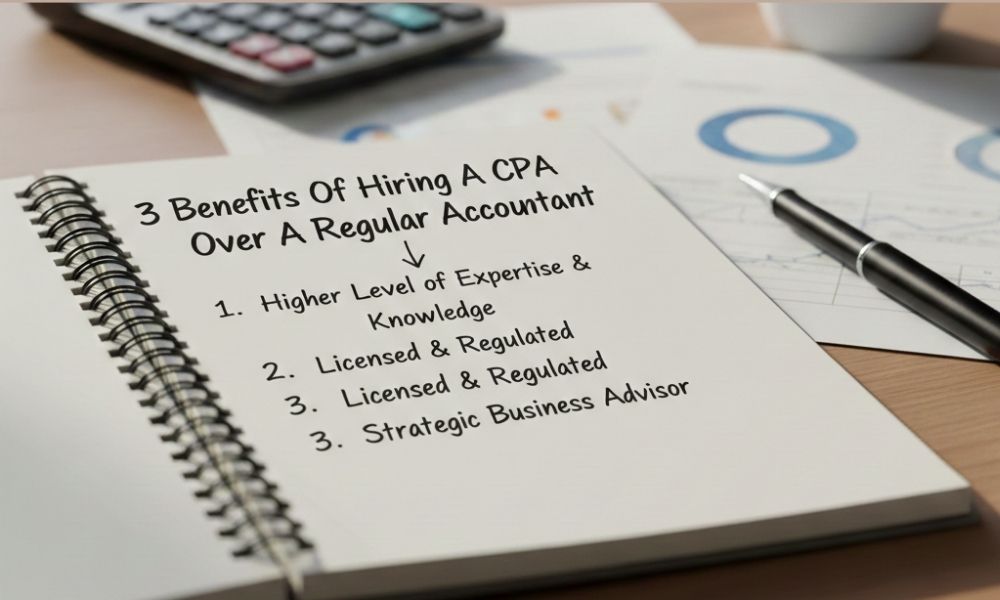
Choosing who handles your taxes and money decisions can feel heavy. You may wonder if a regular accountant is enough or if you need something more. A Certified Public Accountant gives you a higher level of training, testing, and oversight. That difference can protect you when rules change, when the IRS sends a letter, or when your business hits a rough patch. A CPA does not just record numbers. Instead, a CPA helps you plan, avoid mistakes, and face risk with clear options. This is where Campbell CPA can give you an edge. You get guidance that meets strict state standards and a license that is in line with every return. This blog explains three clear benefits of hiring a CPA over a regular accountant, so you can choose with less doubt and more control.
1. You get stronger protection when rules change
Tax rules change every year. You face new forms. You face new challenges. You face new penalties. A CPA trains to keep up with these shifts. A regular accountant may not have the same duty to stay current.
CPAs must pass a state exam. They must meet education rules. They must also complete ongoing learning. State boards can remove a CPA license for poor work. That pressure creates safer habits for you.
Here is how that helps you and your family.
- You reduce the risk of late or wrong filings.
- You lower the chance of missing legal credits or deductions.
- You gain someone who can explain new rules in plain words.
The Internal Revenue Service explains how errors lead to notices and audits. You can see common mistakes on the IRS page on common tax return errors. You do not need to face those alone.
2. You gain full support if the IRS contacts you
An IRS letter can shake any household. Fear grows fast when you read words like “balance due” or “exam.” A regular accountant might help you gather papers. A CPA can go much further.
CPAs can represent you before the IRS. They can speak with agents. They can respond to notices. They can attend hearings. You do not need to sit across from the IRS on your own.
This support covers three key steps.
- First, a CPA reviews the notice and your past returns.
- Next, a CPA prepares your documents and explains your options.
- Then, a CPA speaks for you in a clear and steady way.
The IRS describes who may represent you and how on its page about authorized tax professionals. A CPA sits in that trusted group. That backing can calm a tense moment for you and your family.
3. You receive long-term planning, not just yearly tax prep
Many families see taxes as a once-a-year task. You gather forms in a rush. You hope for a refund. Then you move on. A regular accountant might follow that same pattern. A CPA usually looks beyond one season.
A CPA can help you plan for three major stages of life.
- Working years with wages, tips, or small business income.
- Family growth with childcare, college costs, or home buying.
- Retirement with Social Security, savings use, and possible care needs.
You get help tying today’s choices to tomorrow’s impact. That planning covers topics like when to claim a child credit, how to track business costs, and how to time large purchases. The goal is simple. You keep more of what you earn and sleep with fewer money fears.
CPA vs regular accountant at a glance
The table below shows key differences between a CPA and a regular accountant. This can help you see what you pay for when you choose a CPA.
| Feature | CPA | Regular accountant
|
|---|---|---|
| State license | Required with strict rules | Not required in many jobs |
| Education level | Set number of college credits | Varies from none to college |
| Uniform CPA exam | Must pass | Not required |
| Ongoing training | Mandatory each year | Optional in many settings |
| IRS representation rights | Can represent clients before IRS | Often limited or none |
| Ethics oversight | State board can remove license | Employer rules only |
| Focus of work | Tax, planning, and strategy | Basic records and reports |
How to decide what you need
The right choice depends on your risk and your goals. Some people only need help entering a W-2. Others juggle a business, rental homes, or shared custody. The more moving pieces you have, the more a CPA helps.
Ask yourself three questions.
- Do you face complex tax issues such as a business, rentals, or large stock sales
- Would an IRS letter cause real fear or cost
- Do you want long-term planning, not just yearly filing
If you answered yes to even one, a CPA is likely worth the extra cost. That cost buys you training, accountability, and strong support when rules shift. It also buys you clearer choices about your money.
Your money story affects your children, your partner, and your sense of control. You do not need to walk that road alone. With a CPA by your side, you gain a guide who must answer to the state, to the IRS, and to you. That pressure creates safer outcomes for your home and your future.

Luxury Villas Greece Le Collectionist: Exclusive Greek Retreats

Central Cee Net Worth: Inside His Million-Dollar Rise

Alex Aljoe: A Modern Innovator and Inspirational Leader

Linda Susan Agar: A Visionary Leader Shaping the Future of the Technology Industry 2024

eCrypto1.com Crypto Wallets: The Ultimate Guide to Secure and Efficient Cryptocurrency Storage 2025

The Viral “Emiru Handbra” Moment: How It Became a Stunning Social Media Sensation in 2024
-
 CELEBRITY1 year ago
Linda Susan Agar: A Visionary Leader Shaping the Future of the Technology Industry 2024
-
 CRYPTO1 year ago
eCrypto1.com Crypto Wallets: The Ultimate Guide to Secure and Efficient Cryptocurrency Storage 2025
-
 CELEBRITY1 year ago
The Viral “Emiru Handbra” Moment: How It Became a Stunning Social Media Sensation in 2024
-

 CELEBRITY1 year ago
The Life and Legacy of Harlow Andrus: A Journey of Heritage and Inspiration 2024
-

 FASHION1 year ago
McKinzie Valdez: Journey from Social Media Star to Entrepreneur 2024
-

 CELEBRITY1 year ago
Matt Danzeisen: The Quiet Yet Powerful Figure Behind Peter Thiel’s Success 2024
-

 CELEBRITY1 year ago
Elizabeth Rizzini Biography | Career | Personal Life and More
-

 CELEBRITY1 year ago
David Nehdar: The Private Life and Success of Lacey Chabert’s Husband 2025